
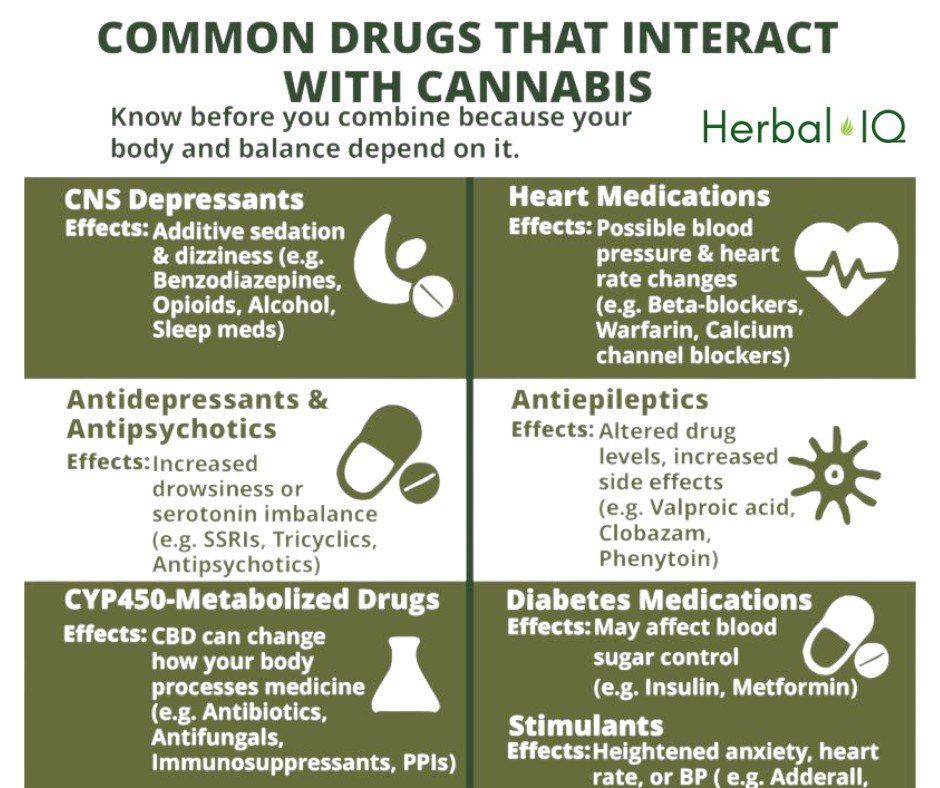
Cannabis is becoming a regular part of many people’s wellness routines, whether through THC, CBD, or full-spectrum products. As the science grows, so does our understanding of how cannabis interacts with certain prescription medications. These interactions don’t mean cannabis is unsafe. They simply mean your body is doing its best to metabolize multiple compounds at once.
With a background in Medical Cannabis Science & Therapeutics (UMB) and years helping people navigate real-world use, I’ve seen how important it is to understand these interactions in a clear, simple way. This article lays out what we know and what you should keep an eye on.
Understanding Why Interactions Occur
Your liver uses a collection of enzymes called the CYP450 system to break down medications. THC and CBD influence several of these enzymes, especially CYP3A4 and CYP2C19. When cannabinoids slow these enzymes down, medication levels may rise. When cannabinoids speed them up, medication levels may fall.
Not everyone responds the same way. Genetics, metabolism, dosing, timing, and even diet can change how cannabis fits into your medication routine. But knowing where to look helps you reduce risk and increase comfort.
Key Medication Categories to Be Aware Of
1. CNS Depressants
Examples: Benzodiazepines, opioids, alcohol, sleep medications.
Why It Matters: Both cannabis and CNS depressants can cause sedation, slower reaction time, and impaired coordination. When combined, the effects can stack, making people feel more impaired than expected.
2. Antidepressants & Antipsychotics
Examples: SSRIs, SNRIs, tricyclics, MAOIs, antipsychotics.
Why It Matters: THC may influence serotonin activity, and CBD may alter blood levels of certain antidepressants. Some people experience more drowsiness or mood shifts. Others do fine with careful monitoring.
3. Heart Medications
Examples: Beta blockers, calcium channel blockers, warfarin.
Why It Matters: Cannabis can temporarily change heart rate or blood pressure. CBD may also affect how blood thinners are processed. This is a category where communicating with your provider is especially important.
4. Antiepileptics
Examples: Valproic acid, clobazam, phenytoin, topiramate.
Why It Matters: CBD can increase levels of certain antiepileptics, especially clobazam, which is why blood-level monitoring is standard for epilepsy patients using CBD therapeutically.
5. Diabetes Medications
Examples: Insulin, metformin.
Why It Matters: Cannabis may indirectly affect blood sugar through appetite changes, eating patterns, or sleep quality. CBD may also slightly influence glucose metabolism. While not a direct chemical interaction, the real-world effects matter.
6. Stimulants
Examples: Adderall, Ritalin, modafinil, even caffeine.
Why It Matters: THC raises heart rate in many people. Stimulants can do the same. For some, the combination feels energizing. For others, it increases anxiety or discomfort.
7. CYP450-Metabolized Drugs
Examples: Antibiotics, antifungals, immunosuppressants, PPIs.
Why It Matters: CBD in particular can slow metabolism of these medications, leading to higher blood levels or more side effects. Timing and dose adjustments often make this manageable.
Practical Guidance for Safe Use
You don’t need to avoid cannabis if you take prescription medication. You just need to approach it thoughtfully.
• Start low and go slow: especially with CBD-rich or edible products.
• Pay attention to changes: energy, sleep, mood, dizziness, heart rate and digestion.
• Timing matters: sometimes separating cannabis and medication by a few hours helps.
• Loop in your care team: especially with heart medications, antiepileptics or blood thinners.
Real-World Perspective
In practice, most interactions end up being manageable, not emergencies. The biggest challenges happen when people don’t know what to expect. Once they do, they adjust dosage, timing, or product type and feel more in control.
As someone who works in the cannabis space every day, I’ve learned this: curiosity leads to safer and more comfortable outcomes. Ask questions. Notice how your body responds. And don’t be afraid to talk openly with your provider.
Final Thought
If you’ve been using cannabis or CBD alongside medication, what changes or effects have you noticed? Your experience may help someone else understand theirs.
