
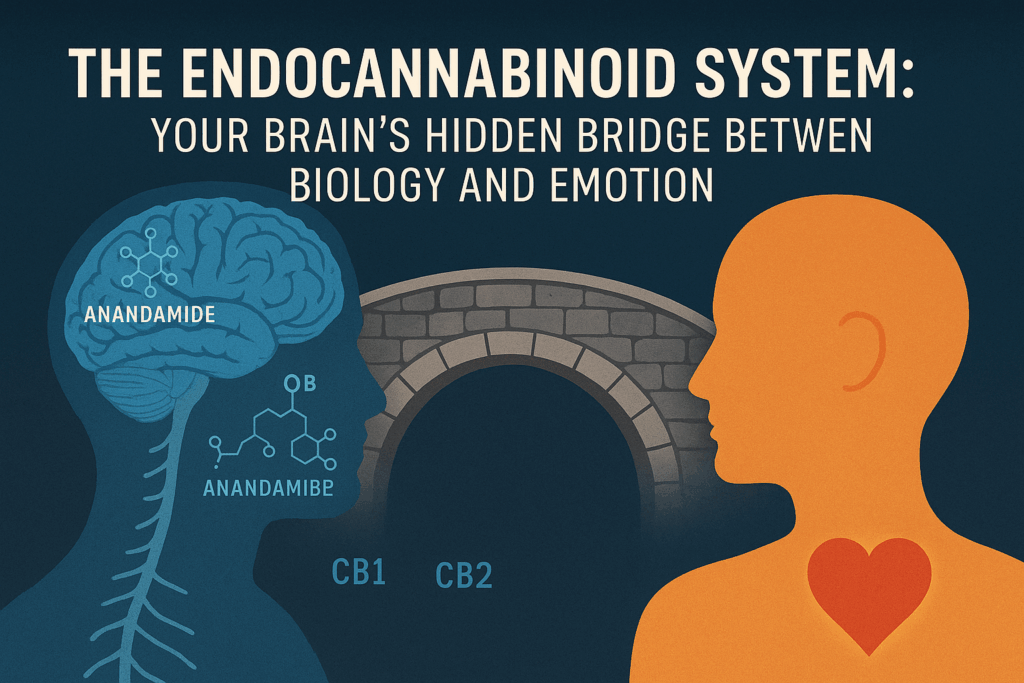
The Endocannabinoid System (ECS) plays a central role in maintaining the body’s physiological balance, or homeostasis. It is a complex signaling network that influences mood, memory, pain sensation, immune response, and many other vital functions. Recent scientific work, such as the 2025 study “Biological Phenomena as Psychological Expression” by Dr. David A. Dawson, highlights the ECS as a biological foundation for cognitive and emotional processes.
Understanding the Endocannabinoid System
The ECS consists of cannabinoid receptors (CB1 and CB2), naturally produced molecules called endocannabinoids (such as anandamide and 2-arachidonoylglycerol or 2-AG), and enzymes that regulate their production and degradation. These elements work together to regulate communication between cells throughout the brain and body.
– CB1 receptors are predominantly found in the brain and central nervous system, where they influence mood, coordination, and cognitive function.
– CB2 receptors are primarily located in the immune system and peripheral tissues, where they help regulate inflammation and immune response.
– Endocannabinoids like anandamide act as messengers that bind to these receptors, promoting balance across various systems.
The ECS and Psychological Processes
Dr. Dawson’s study emphasizes how the ECS links biological mechanisms to psychological experiences. This system’s signaling pathways interact closely with brain regions such as:
– The amygdala, which regulates emotions and fear responses.
– The prefrontal cortex, associated with decision-making and focus.
– The hippocampus, which governs memory and learning.
When ECS activity is balanced, emotional and cognitive processes function optimally. However, when disrupted, it can contribute to mental health conditions such as anxiety, depression, post-traumatic stress disorder (PTSD), and attention-deficit disorders. Research indicates that supporting healthy ECS function may help stabilize mood, reduce stress, and enhance cognitive clarity.
Cannabinoids and the ECS
Phytocannabinoids—compounds derived from the cannabis plant—interact with the ECS to influence these biological pathways. Cannabidiol (CBD), for example, indirectly affects ECS receptors and helps modulate neurotransmitter activity. Tetrahydrocannabinol (THC), on the other hand, directly binds to CB1 receptors, producing psychoactive effects.
These interactions suggest that the ECS acts as a biochemical bridge between body and mind. By influencing neurotransmitter systems, it can help explain why cannabis and its derivatives have effects on both physical states (such as pain and inflammation) and psychological states (such as anxiety or relaxation).
Conclusion
The endocannabinoid system represents one of the most significant discoveries in modern neuroscience. It demonstrates how closely intertwined our biological and psychological worlds truly are. As researchers like Dr. Dawson continue to explore its mechanisms, the ECS is emerging not only as a key to understanding mental health but also as a potential target for innovative therapies that integrate biological and emotional healing.
Dawson, D.A. (2025). Biological phenomena as psychological expression. ResearchGate.
