
Published by Herbal IQ Education & Consulting
Iowa’s hemp industry is facing another pivotal moment.
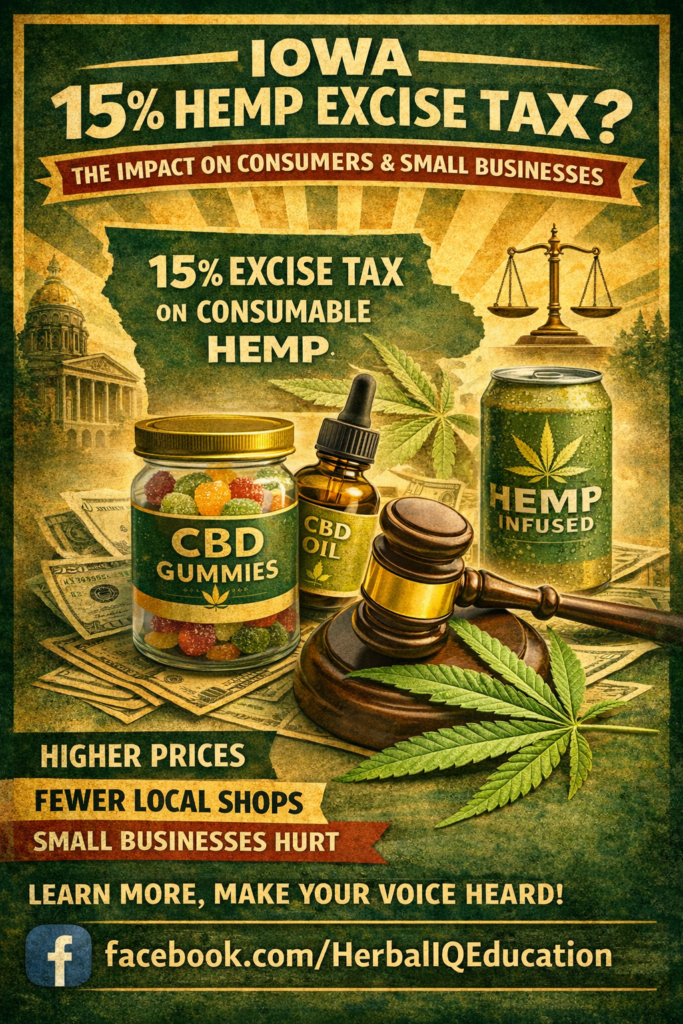
During the 2026 legislative session, lawmakers introduced a proposal that would place a 15% excise tax on consumable hemp products at the point of sale. While this may sound like a simple tax policy, the reality is much deeper and more impactful for both consumers and small businesses across the state.
Let’s break down what this means and why it matters.
Understanding the Proposed Hemp Excise Tax in Iowa
The proposed legislation would require retailers to collect a 15% excise tax directly from consumers when purchasing consumable hemp products. This includes popular items like hemp-derived beverages, gummies, tinctures, and other wellness products.
At first glance, this may appear to be a revenue-generating measure. But in practice, it represents a significant shift in how Iowa treats hemp.
Rather than supporting a stable, regulated wellness market, this approach begins to position hemp products in a category similar to heavily taxed substances without offering the structure of a fully regulated cannabis system.
The Real Impact on Iowa ConsumersFor consumers, the most immediate effect is simple: higher prices at the register.But the downstream effects are where this becomes more concerning:
- Reduced access to regulated, labeled products
- Increased likelihood of consumers seeking alternatives online or out of state
- Greater exposure to unregulated or inconsistent products
For many individuals using hemp as part of a wellness routine, especially those on fixed incomes, even modest price increases can change purchasing behavior.
The Challenge for Iowa Hemp Retailers
For small, compliant retailers, this proposal adds another layer of pressure to an already evolving marketplace.
Over the past year, Iowa businesses have adapted to:
- Strict THC limits
- Product reformulation requirements
- Reduced product availability
Now, adding a 15% excise tax creates a difficult choice:
- Pass the cost on and risk losing customers
- Absorb the cost and reduce already tight margins
In many cases, neither option is sustainable long term.
A Bigger Picture: Policy vs. Public Health
If the goal is consumer safety, the most effective path forward is clear:
- Enforce product testing and labeling standards
- Hold non-compliant operators accountable
- Support access to regulated, transparent products
Policies that unintentionally push consumers toward unregulated markets can have the opposite effect of what lawmakers intend.
Why This Moment Matters
This is more than a tax discussion. It’s about the future of hemp in Iowa.
We are at a point where decisions made today will shape:
- Consumer access to safe products
- The survival of small, local businesses
- The credibility of a regulated wellness marketplace
There is still time for thoughtful conversation, education, and advocacy.
Stay Informed. Stay Empowered.
At Herbal IQ Education & Consulting, our mission is simple:
Provide clear, science-based education so individuals and communities can make informed decisions.
If you found this helpful, we invite you to stay connected:
👉 Follow us on Facebook:
https://www.facebook.com/HerbalIQEducation
👉 Download our FREE educational guide to better understand hemp, cannabinoids, and safe use:
https://herbal-iq.com/
Education matters. Awareness matters. Your voice matters.

