
And it’s a quiet signal that the ground is shifting
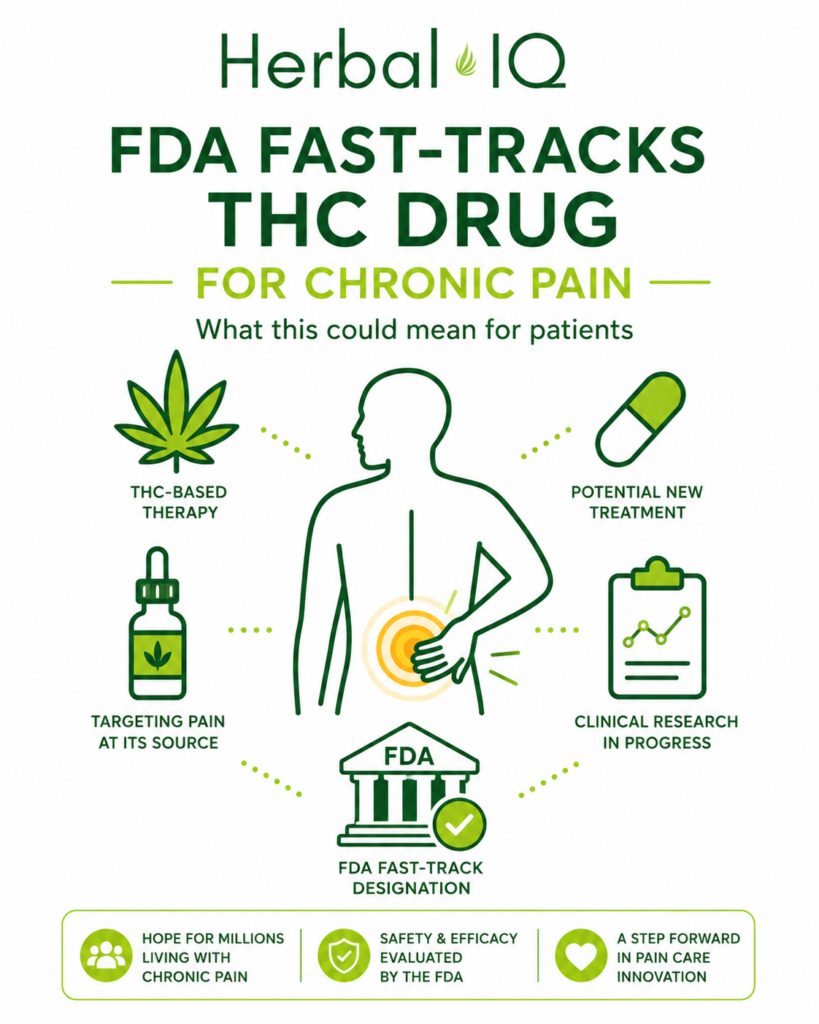
Every once in a while, something happens in cannabis that feels less like a headline and more like a door unlocking. This is one of those moments. GreenState reported that the FDA has granted Breakthrough Therapy status to VER-01, a plant-derived, full-spectrum cannabis extract being developed for chronic low back pain.
If you’re thinking, “Wait… THC? FDA? Breakthrough status?” you’re not alone.
This matters, not because it’s the first time people have used cannabis for pain, but because it’s the FDA looking at a THC-containing medicine and saying: the clinical evidence is strong enough to accelerate the pathway.
What is VER-01, in plain English?
VER-01 is being developed by Vertanical, a German pharmaceutical company. GreenState describes it as a full-spectrum cannabis extract intended as a non-opioid alternative for chronic low back pain.
Here’s the detail that made me pause:
- Each dose contains about 2.5 mg THC
- Plus smaller amounts of other cannabinoids, including about 0.1 mg CBG and 0.02 mg CBD
So no, it’s not “CBD with a whisper of THC.” This is a THC-forward formulation in a controlled, pharmaceutical format.
GreenState also reports that in the Phase 3 trial, patients were titrated to individualized doses and the average daily THC dose was about 19 mg/day.
Why the FDA designation is a big deal
Breakthrough Therapy designation is meant to speed development and review for drugs that show substantial improvement over existing therapies for serious conditions.
GreenState’s framing is right: if this progresses, VER-01 could become one of the first FDA-approved cannabis medicines containing clinically meaningful THC.
And it highlights a contrast that’s worth remembering:
The FDA currently lists only one cannabis-derived drug approval: Epidiolex (CBD), plus a few synthetic cannabinoid medications (dronabinol products and nabilone).
So a plant-derived THC medicine moving through an accelerated FDA pathway is not business-as-usual.
What the studies reported (as shared by GreenState)
GreenState says the designation followed two successful randomized, controlled Phase 3 trials.
They summarize one trial where, after 12 weeks, the VER-01 group reported about a 2-point pain reduction on an 11-point scale versus 1.4 points for placebo, and also reported improvements in sleep and physical function.
They also summarize another study comparing VER-01 to physician-selected opioid treatment, where at six months the VER-01 group reported greater pain reduction and larger improvements in sleep quality, with less constipation reported than the opioid group.
GreenState also notes researchers reported no evidence of abuse, dependence, or withdrawal symptoms associated with VER-01 during the study period.
What comes next (timeline reality)
Vertanical plans another U.S.-based Phase 3 trial to support its FDA application, and GreenState reports the company expects to submit a New Drug Application in 2028.
So this isn’t “next month” news. But it’s still meaningful now, because regulatory posture changes before the market changes.
Why I think this matters for patients and public health
Here’s what I see underneath the headlines.
1) This is a vote for dose-controlled, evidence-driven cannabinoid medicine
A lot of the public debate gets stuck on whether cannabis is medicine. The FDA doesn’t deal in vibes. It deals in trials, endpoints, and manufacturing controls.
This is what it looks like when cannabinoids are evaluated like other therapeutics: standardized dosing, consistent formulation, and clear outcomes.
2) It reopens the “pain + opioids” conversation in a serious way
Chronic pain is one of the most common reasons people seek medical cannabis, but evidence quality varies by condition and product type, and the broader pain landscape is complicated. CDC notes that evidence for cannabis helping most pain types is limited, though some studies suggest benefit for neuropathic pain.
A pharma-grade THC product with Phase 3 data could change how more mainstream clinicians think about cannabinoid options in pain care.
3) It could eventually change access if approved
An FDA-approved drug can potentially be prescribed, covered, and monitored in a way state programs often can’t. That could widen access for some patients and create a clearer safety framework.
That said, it won’t replace state programs overnight, and it won’t fit every patient. But it could become a serious new tool.
The honest guardrails
This is promising, but it’s not a blanket endorsement of “THC for everyone.”
A pharmaceutical extract is not the same thing as a dispensary menu. Dose, formulation, titration, contraindications, drug interactions, and monitoring all matter.
That’s exactly why I’m watching this. It’s not the hype lane. It’s the evidence lane.
CTA: Want the real story behind the headlines?
If you want cannabis policy and science explained in plain language, with the nuance left in, become a member at Herbal IQ Education & Consulting.
Membership is where I break down developments like this into:
- what the FDA pathway actually means
- what the data suggests (and what it doesn’t)
- how to think about dosing, safety, and real-world application
If you’d like, I’ll also publish a member-only follow-up: “What Breakthrough Therapy designation means and what it doesn’t.”
References
- GreenState: The FDA is quietly fast-tracking a THC drug — and it’s a big deal (June 4, 2026).
- FDA: FDA and Cannabis: Research and Drug Approval Process (FDA summary of approved cannabis-derived and synthetic cannabinoid drugs).
- CDC: Cannabis and Chronic Pain (overview of evidence limits and neuropathic pain notes).
Disclaimer
Educational content only. Not medical advice. This article discusses research and regulatory developments and does not recommend or endorse any product. Do not use THC or CBD to treat a medical condition without guidance from a licensed clinician. Laws vary by state.
#HerbalIQ #ChronicPain #THC #CannabinoidScience #FDA #PublicHealth #PainManagement #MedicalCannabis #EvidenceBased #HealthEducation

